
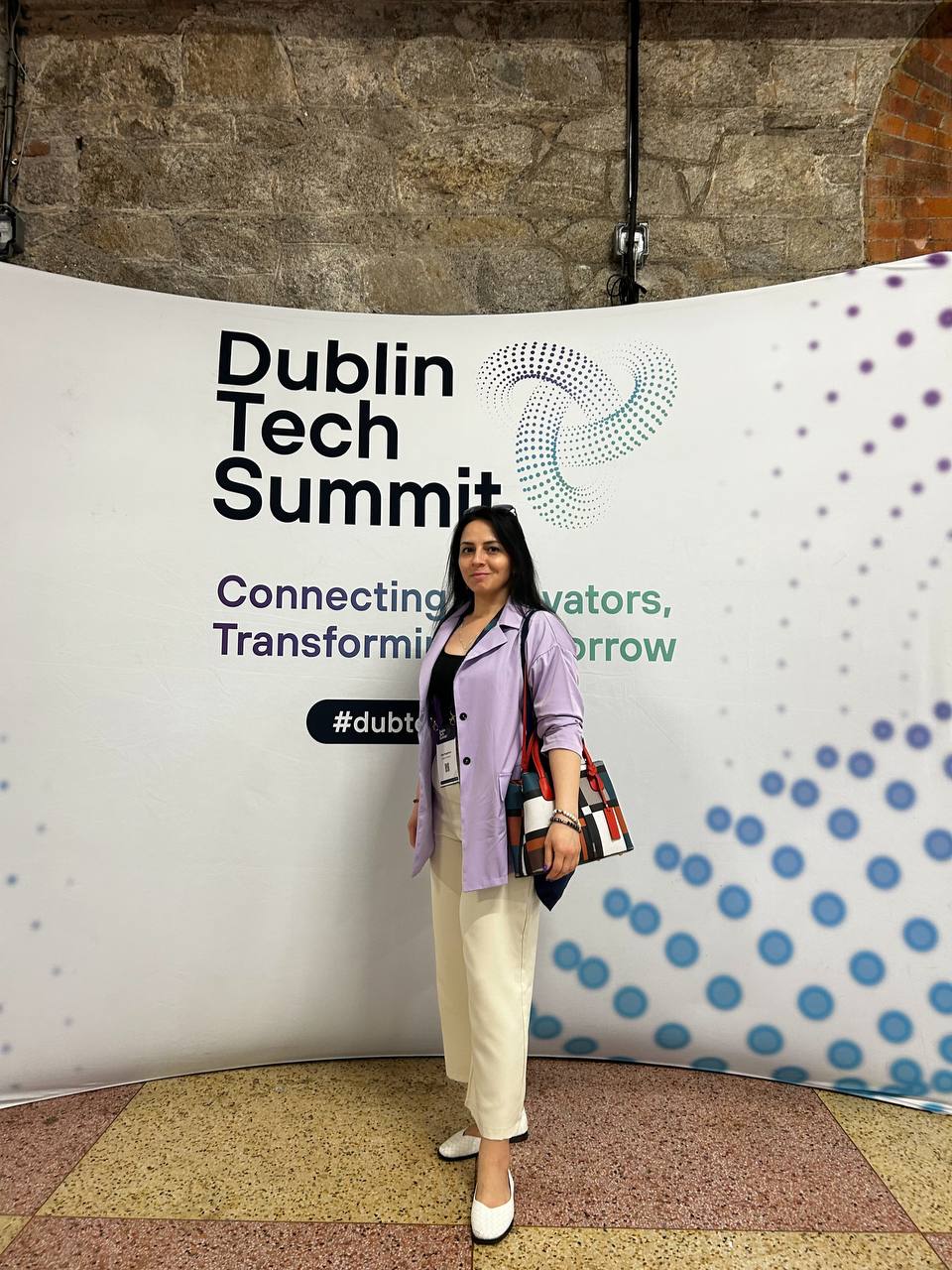
This year, Mellivora Software’s CEO, Olga Pogozheva, attended Dublin Tech Summit 2026 — a special edition of the event celebrating its 10-year anniversary. And judging purely by the atmosphere on-site, this year’s summit felt bigger, busier, and significantly more dynamic than before.
The energy throughout the venue was impossible to miss. From packed networking zones and crowded exhibition halls to ongoing conversations between founders, investors, engineers, and startup teams, Dublin Tech Summit once again proved why it has become one of Europe’s flagship technology events.
A Stronger Crowd, More Momentum
Perhaps it was the anniversary year, perhaps the growing role of AI in every industry — but the event genuinely felt larger in scale this time around.
There were noticeably more exhibitors, visitors, and startup booths, with a strong mix of local Irish companies, international startups, established tech players, and service providers all sharing the same space. One of the most enjoyable parts of events like DTS is seeing how companies present themselves creatively — and this year definitely delivered on that front.
Among the more memorable booths was Damson Cloud, whose “wheel of presents” attracted a constant crowd throughout the day.
Another particularly interesting company showcased specialized relief pillows designed primarily for hospital patients and people with neck and mobility issues — a reminder that innovation is not only about software and AI, but also about practical products that improve people’s lives directly.
Europe’s Startup Challenge — and Why Many Founders Go to the US
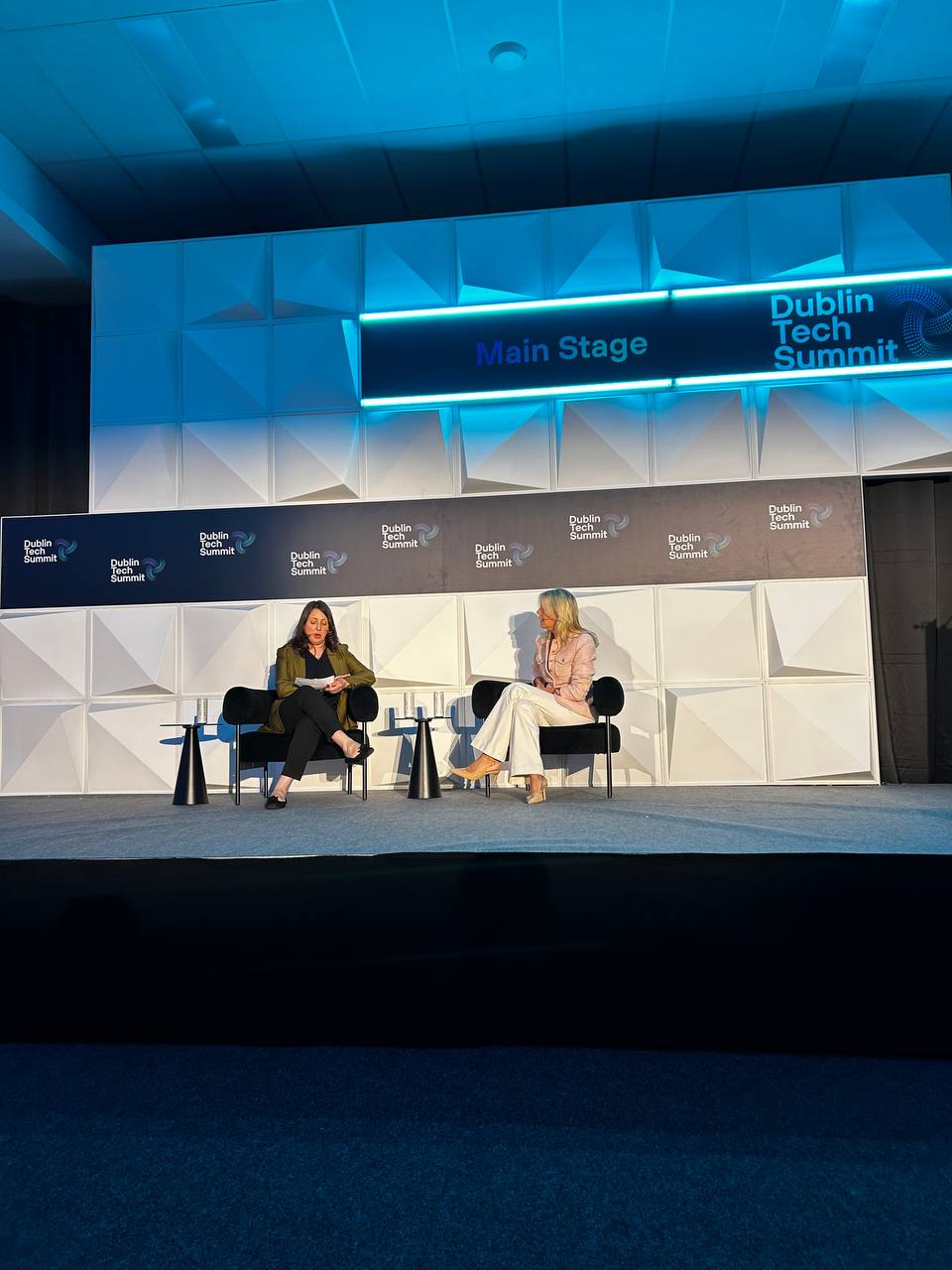
One of the most insightful talks attended during the summit was “Europe’s Next Growth Era” featuring Eileen O’Mara, Chief Revenue Officer at Stripe, interviewed by Jennifer Duggan, Ireland Bureau Chief at Bloomberg.
One point from the discussion stood out particularly strongly.
Eileen noted that it is not surprising that so many globally dominant startups emerge from the United States. American founders gain access to a massive domestic market almost immediately, while European startups often face fragmentation from the very beginning.
Founders in Ireland, Germany, France, the UK, and across Europe frequently encounter additional barriers when scaling:
- multiple markets
- different regulations
- language differences
- fragmented ecosystems
- slower expansion opportunities
As a result, many European startups naturally look toward the US market when planning long-term growth. It’s a reality that continues to shape the global startup landscape and one that deserves honest discussion when speaking about Europe’s competitiveness in technology and innovation.
AI Everywhere
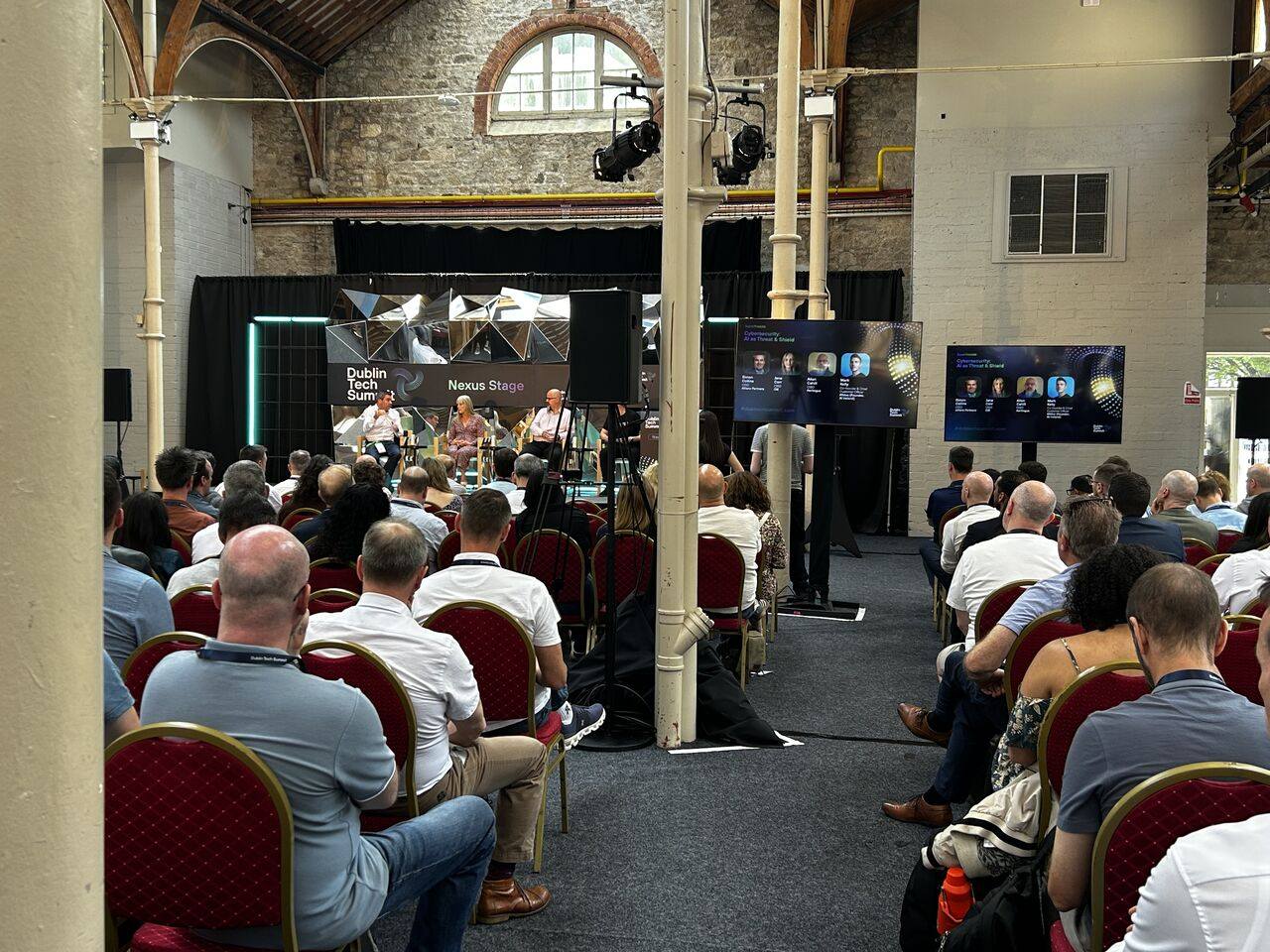
Unsurprisingly, artificial intelligence dominated a huge portion of this year’s conversations, exhibitions, and startup showcases.
AI-powered products appeared across nearly every category:
- marketing
- customer service
- analytics
- productivity
- automation
- social media
One particularly interesting company was Coso.ai by James Flynn, focused on AI assistants for social media and content workflows. The concept itself looks extremely promising and reflects the growing movement toward AI-powered operational support for businesses.
At the same time, events like DTS also highlight an ongoing industry conversation around trust, control, and automation. While AI tools are becoming more powerful and accessible, many founders and operators still carefully evaluate where they feel comfortable delegating control — especially when it comes to branding, communication, and decision-making processes.
The Real Value of Events Like DTS
Of course, no Dublin Tech Summit experience would be complete without mentioning one eternal challenge: parking.
This year, it seemed even more difficult than usual. For anyone planning to attend next year’s event, one practical recommendation would be simple:
arrive early — and leave late.
Not only does it help avoid logistical headaches, but many of the best conversations happen after the official talks are over. The after-hours networking events and evening meetups are often where the most valuable connections are made.
And ultimately, that may be the biggest strength of conferences like Dublin Tech Summit.
You don’t necessarily arrive knowing exactly who you’re going to meet. The value comes from spontaneous conversations, unexpected introductions, and connecting with people who are building ambitious things in different corners of the industry.
That kind of networking — immediate, human, unscripted — remains incredibly valuable in a world increasingly dominated by digital communication.
Looking Ahead
As AI continues reshaping how companies build products, scale teams, and interact with customers, events like Dublin Tech Summit offer a valuable snapshot of where the industry is heading next.
For Mellivora Software, attending DTS 2026 was not only an opportunity to follow emerging trends, but also to engage directly with the startup and innovation ecosystem that continues driving the future of technology in Europe and beyond.
And if this year’s summit is any indication, that future is moving very fast.
Say Hello
If you met us at DTS — hello again!
If you didn’t, but you’re still reading — let’s fix that.
At Mellivora, we listen before we build. And if you’re struggling with tech side of your business, limited resources, or a growing product backlog, maybe it’s time we talked.
Everyone’s welcome.